UAP Insight — Daily UAP & UFO News Aggregator
Top storiesSunday, October 18, 2026
1
Extending the Loeb Scale to the Search for Extraterrestrial Artificial Intelligence (SETAI)
Avi Loeb proposes an extension to the Loeb Classification Scale designed to assess anomalous objects for signs of extraterrestrial artificial intelligence (SETAI). The extended framework adds a preliminary step to determine whether observational data can support inferences about object control, then applies the existing Loeb Scale, and finally evaluates which control architectures are compatible with the recorded data, using three exclusion tests (T1–T3).
2
In More Than 8% of the Sensor Videos Declassified by PURSUE, the UAP Might be Birds
Avi Loeb analyzes declassified infrared sensor videos from the PURSUE collection, identifying that over 8% of analyzed footage may depict birds rather than genuine UAPs, including analysis of wingbeat frequency patterns observed in a 2020 Middle East recording.
PURSUE Release 6Sep 18, 2026
59 new records — Department of War, Local Law Enforcement
Yesterday2
- 1.Extending the Loeb Scale to the Search for Extraterrestrial Artificial Intelligence (SETAI)(avi-loeb.medium.com)
Avi Loeb proposes an extension to the Loeb Classification Scale designed to assess anomalous objects for signs of extraterrestrial artificial intelligence (SETAI). The extended framework adds a preliminary step to determine whether observational data can support inferences about object control, then applies the existing Loeb Scale, and finally evaluates which control architectures are compatible with the recorded data, using three exclusion tests (T1–T3).
- 2.Take Me to the Nearest Alien Spacecraft(avi-loeb.medium.com)
Avi Loeb participated in a panel discussion at the Virginia Theatre in Champaign on October 16–17, 2026, attended by nearly 1,500 people, examining factual and fictional aspects of alien spacecraft alongside panelists Sarah Edwards, Bill Odenkirk, and Ahmed Best.
Earlier this week13
- 3.Digital Data or Material Evidence Please; The Time is Ripe to Go Beyond Verbal Testimonies on UAP!(avi-loeb.medium.com)
Avi Loeb calls for material evidence and digital data on UAP rather than relying solely on verbal testimony. The piece references a Fox News interview with former UAP Task Force Director Jay Stratton, who stated the government possesses nonhuman craft and that he has personally witnessed nonhuman beings and craft. Loeb argues that the scientific community needs concrete, verifiable evidence to move the UAP discussion beyond anecdotal accounts. Stratton's claims represent a significant public statement by a former government official, though the full context of his remarks and any supporting documentation remain to be fully disclosed.
- 4.In More Than 8% of the Sensor Videos Declassified by PURSUE, the UAP Might be Birds(avi-loeb.medium.com)
Avi Loeb analyzes declassified infrared sensor videos from the PURSUE collection, identifying that over 8% of analyzed footage may depict birds rather than genuine UAPs, including analysis of wingbeat frequency patterns observed in a 2020 Middle East recording.
- 5.Scientists Build a Sensor That Can Test Individual Molecules for a Potential Signature of Life(thedebrief.org)
Scientists have developed a new sensor capable of analyzing individual molecules to detect potential biosignatures of extraterrestrial life in meteorites and soil samples. This technology could enhance the search for evidence of past or present microbial life beyond Earth.
- 6.NASA chief says all UAP data released; Coulthart says no | Reality Check(newsnationnow.com)
NewsNation's Reality Check segment addresses conflicting claims about UAP data transparency between NASA leadership and journalist Ross Coulthart, examining Apollo 17 archival footage, a reported cylindrical "mothership" sighting, and the potential role of AI in UAP analysis.

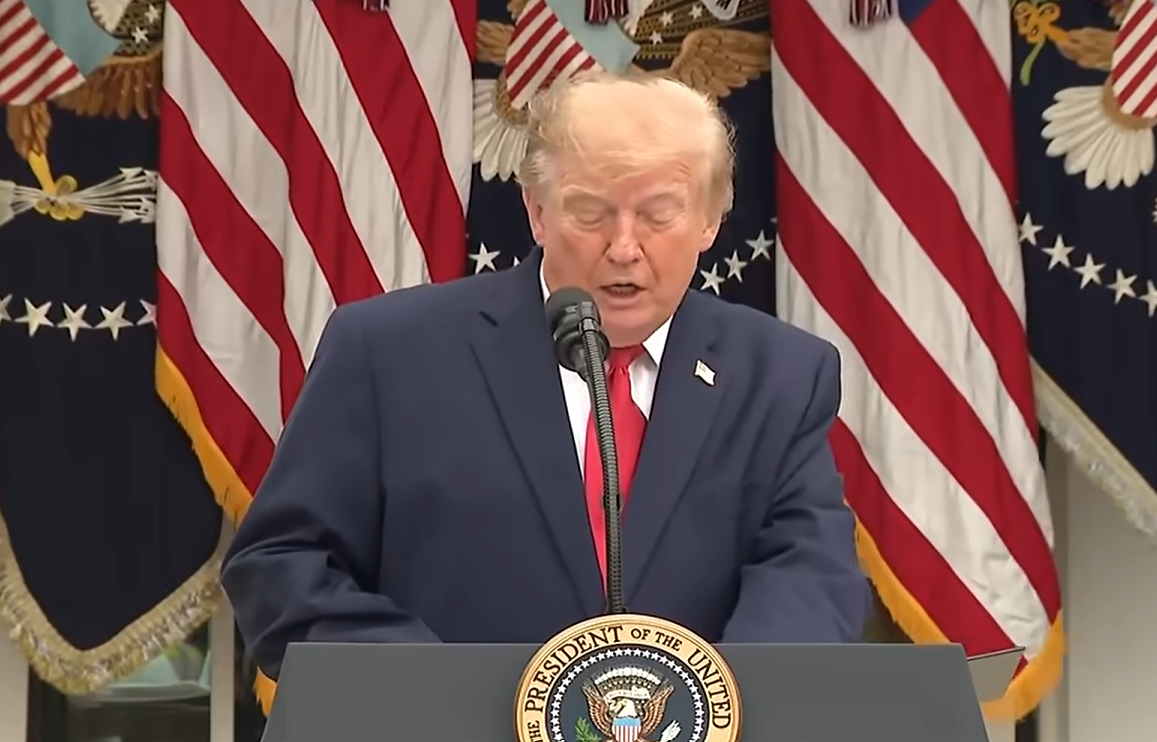
- 7.Trump Leaves Door Open to UFO Disclosure Announcement: “I’m Looking”(liberationtimes.com)
President Trump indicated openness to a UFO disclosure announcement, stating
- 8.Israeli Military Continues the Search for an Unidentified Aerial Object Detected Near Lebanese Border(thedebrief.org)
The Israeli military detected and responded to an unidentified aerial object near Israel's northern border with Lebanon. Details of the incident, including the object's characteristics, origin, and outcome, remain limited in the available information.
- 9.“More Dune Than Avatar”: Scientists Say These Nearby Exoplanets Could Be Home to Alien Life(thedebrief.org)
A study examining 29 nearby rocky exoplanets concluded that most could support only microbial life, while some may potentially host larger lifeforms analogous to sandworms. The research evaluates habitability conditions on worlds within measurable distance of Earth.
- 10.Why Ross Coulthart says NASA's UAP disclosure isn't complete(newsnationnow.com)
Journalist Ross Coulthart argues that NASA's public disclosure on UAPs is incomplete, calling for the full release of all available data.

- 11.SCU Review 7.4: News from the Scientific Coalition for UAP Studies(explorescu.org)
A newsletter issue from the Scientific Coalition for UAP Studies covering multiple topics including a Reddit Q&A, academic conference submissions, historical analysis of Kenneth Arnold's 1947 sighting, and commentary on UAP-related matters.

- 12.'Archive X' and the impossible | Reality Check(newsnationnow.com)
Ross Coulthart and Jeffrey J. Kripal discuss Kripal's new media series "Archive X: Unexplained Phenomena." The piece appears to be a promotional or review discussion of the series focusing on unexplained phenomena.

- 13.UAP Storytelling Versus UAP Reality: “We Interrupt This Program …”(avi-loeb.medium.com)
Avi Loeb is participating in a hybrid theatrical event called "We Interrupt This Program" at the Virginia Theatre in Champaign, Illinois, which uses a satirical play format to examine UAP storytelling versus factual reality.
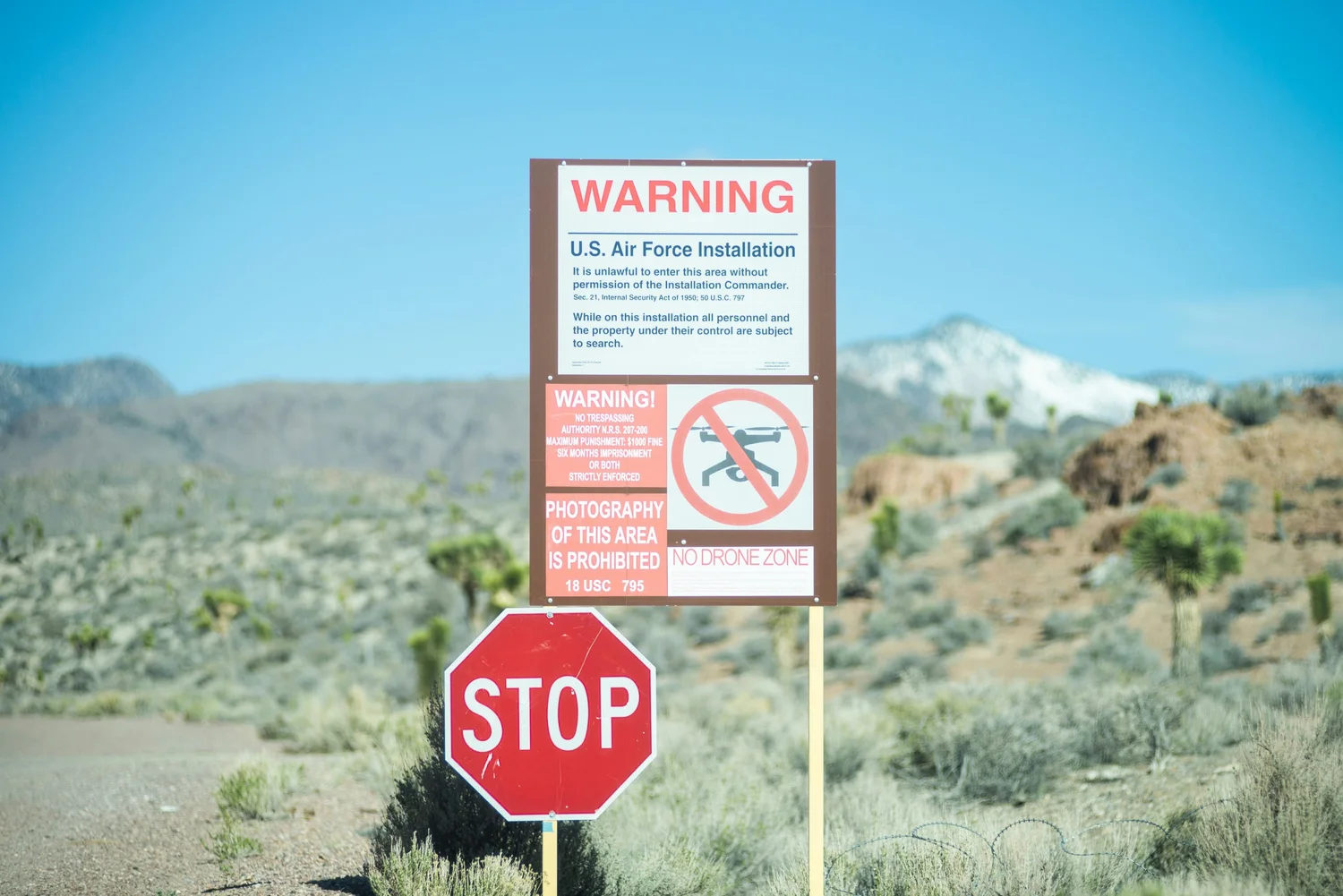
- 14.Former Army Sniper Says He Was Told of Deadly Encounter With Reptilian Beings Near Area 51(liberationtimes.com)
Former U.S. Army sniper Nick Betts recounted an unverified secondhand account on a podcast in which an unnamed source allegedly described a deadly underground encounter between U.S. military personnel and reptilian-looking beings near Area 51, with casualties reportedly suffered on both sides. The claim lacks corroboration, official confirmation, or verifiable evidence and relies entirely on anecdotal hearsay.
- 15.JOIN US AT THE MUFON WORLD SYMPOSIUM July 22-25, 2027 – KANSAS CITY, KANSAS(mufon.com)
MUFON announced the planning of its 2027 World Symposium, scheduled for July 22–25, 2027, at the Marriott Kansas City Overland Park in Kansas. The event brings together UFO researchers and enthusiasts for an annual gathering.
Older35
- 16.UFOs Breach Nuclear Airspace – The Briefing Room with Richard Beckwith(mufon.com)
MUFON's Richard Beckwith examines recently released NRC internal communications and FOIA disclosures concerning unidentified craft incidents over commercial nuclear reactors, highlighting a historical gap in regulatory responsibility and oversight protocols.
- 17.New Records Reveal Repeated Drone Flights Over U.S. Nuclear Sites, Including Reactors Near Langley Air Force Base(liberationtimes.com)
Liberation Times obtained security reports documenting repeated drone flights over Virginia's Surry Nuclear Power Plant in December 2024, including passes directly over both reactor containment buildings. The reports detail incursions over a critical U.S. nuclear facility, raising security concerns.

- 18.Mapping the Palomar transient hotspots | Reality Check(newsnationnow.com)
Dr. Beatriz Villarroel and Dr. Stephen Bruehl present research suggesting unexplained transient light flashes were recorded on Palomar Observatory photographic plates in the years before Sputnik's 1957 launch, potentially indicating near-Earth space activity of unknown origin.

- 19.Earth microbes survive simulated conditions of Saturn moon’s ocean(theguardian.com)
Researchers demonstrated that Earth microbes can survive simulated conditions of Enceladus's subsurface ocean, strengthening the case that Saturn's moon could harbor extraterrestrial life.
- 20.First Triangulation Results in Search for UAP by the Galileo Project Observatories(avi-loeb.medium.com)
Avi Loeb reports initial triangulation results from the Galileo Project's observatory network in Las Vegas, addressing the limitation of existing UAP footage lacking precise distance measurements needed to calculate true velocities and accelerations.
- 21.Astroparticle physicist Matthew Szydagis on UAP science | Reality Check(newsnationnow.com)
Astroparticle physicist Matthew Szydagis discusses the UAP Science Advisory Council, declassification efforts, analysis of physical samples, and harassment he has experienced in relation to UAP research.

- 22.Insights from the Sixth UAP Tranche (Sep. 18, 2026)(avi-loeb.medium.com)
Avi Loeb analyzes infrared sensor footage from a 2025 U.S. military platform showing six small spherical objects grouped together, estimated to be traveling at 480 mph with agile directional changes.
- 23.Are We the Indigenous Intelligent Species in Our Cosmic Neighborhood?(avi-loeb.medium.com)
Avi Loeb discusses the possibility that Earth's intelligent species may be unique or among the first in the cosmic neighborhood in a NewsNation interview. The transcript touches on Pentagon declassification efforts and UAP transparency, though the full context of his argument is not provided in the excerpt.
- 24.The Six Infrared Dots in a Declassified UAP Video is a Flock of Birds(avi-loeb.medium.com)
Avi Loeb published an analysis arguing that six infrared dots in a declassified UAP video (DOW-UAP-PR135) released by PURSUE in September 2026 are consistent with a flock of birds. The analysis examines four consecutive frames showing the objects over approximately one second and references recent research by J. Haqq-Misra and colleagues.
- 25.In the Quest for Life Beyond Earth, a Nanotech Breakthrough Could Supercharge the Search Using Electrical Sensing(thedebrief.org)
Researchers are developing nanotech-based electrical sensing tools that could enhance the detection of potential extraterrestrial biology on distant worlds.
- 26.The Trump Administration Can Make History by Unraveling Alien Technology(avi-loeb.medium.com)
Avi Loeb argues that the Trump administration should prioritize the identification and reverse-engineering of alleged alien technology by developing better methods to distinguish non-human artifacts from natural objects and human-made systems.
- 27.Strange Signals Were Just Detected Coming from an Alien World—and They Reveal Something Astronomers Have Never Seen Before(thedebrief.org)
Scientists have detected mysterious radio signals originating from an exoplanet 63 light-years away that reveal astronomical phenomena previously unobserved.
- 28.The Event Horizon of Alien High Tech(avi-loeb.medium.com)
Avi Loeb uses Plato's Allegory of the Cave as a metaphor to discuss humanity's potential limitations in detecting advanced alien technology, suggesting our current observational capabilities may prevent us from recognizing signs of extraterrestrial civilization.
- 29.Could a Black Hole Be Used as a Power Plant? We Asked An Expert—Here’s the Surprising Answer(thedebrief.org)
An expert discusses the theoretical possibility of advanced civilizations using black holes as power sources. The analysis explores the physics and challenges behind such a concept.
- 30.We're looking for life on other planets. Are we ready to find it?(npr.org)
NPR examines humanity's readiness to detect extraterrestrial life, connecting Frank Drake's pioneering 1960 signal-listening experiments to modern search efforts and exploring the implications of discovery.
- 31.White House Leaves UFO Shootdown Claims Unanswered(liberationtimes.com)
The White House's UFO disclosure effort, operating under the PURSUE program, has released imagery regarding UFO shootdown claims, but much of the material remains ambiguous and unresolved.
- 32.“Great News in the Search for Life”: Saturn’s Moon Enceladus May Be Even More Hospitable to Life Than Scientists Thought(thedebrief.org)
Recent research indicates that Saturn's moon Enceladus may have greater potential habitability for life and more favorable conditions for detecting biosignatures than previously believed.
- 33.Ross Coulthart Q&A: Coulthart: New whistleblower rules are 'not transparency'(newsnationnow.com)
Ross Coulthart critiques new whistleblower rules as insufficient for transparency and discusses the lack of an official government platform for UAP reports, DMT research at Skinwalker Ranch, and speculation about a UAP event in 2027.

- 34.UFO files: Avi Loeb puzzled by unusual objects in sightings being soundless(newsnationnow.com)
Avi Loeb notes that recently disclosed UAP files describe objects moving at extremely high speeds while producing no audible sound, a characteristic he finds puzzling.

- 35.UFO files: Avi Loeb puzzled by unusual objects in sightings being soundless(newsnationnow.com)
Avi Loeb expresses puzzlement over recently released files showing UAP objects moving at extremely high speeds while producing no sound.
- 36.Space Force weapons may signal shift in US defense strategy: Ross Coulthart(newsnationnow.com)
Ross Coulthart comments on a potential shift in U.S. defense strategy regarding Space Force weapons, noting a discrepancy between May 2024 military statements denying orbital weapons and more recent developments.

- 37.David Grusch: Americans killed by reptilian beings at crash site | Reality Check(newsnationnow.com)
NewsNation host Ross Coulthart examines claims by David Grusch regarding UAP-related deaths, including allegations involving non-human entities and military disappearances.

- 38.TsIG – The TechnoSignature Intercept Grid Real Time Alert System Coming Soon to The MUFON Store! By Steve Foss(mufon.com)
MUFON announces development of TsIG, a real-time UAP alert system building on the earlier MADAR network, in partnership with another organization.
- 39.Could Fungi Be the Missing Ingredient for Growing Food on Mars?(thedebrief.org)
A scientific review examines the potential use of fungi as a solution to support food cultivation on the Moon and Mars.
- 40.The 'real' secret space program | Reality Check(newsnationnow.com)
Ross Coulthart and filmmaker Darcy Weir discuss an alleged secret space program. The piece examines claims and evidence surrounding covert space activities.

- 41.Alien Adventures During the Texas Tribune Festival in Austin(avi-loeb.medium.com)
Avi Loeb discusses his involvement in UAP research and reflects on recent reporting, including an investigative feature by POLITICO journalist Ilan Greenberg covering his work.
- 42.What Separates Human Intelligence From AI? Scientists Say the Answer May Be Chemistry(thedebrief.org)
Scientists propose a new biochemical model suggesting that human brain chemistry may represent a fundamental distinction between biological and artificial intelligence.
- 43.Avi Loeb says he never said aliens could reveal themselves within 16 days(newsnationnow.com)
Avi Loeb clarified that he never claimed aliens could reveal themselves within 16 days, noting that believing such a statement could be dangerous misinformation.

- 44.A Mysterious Briefcase Comes MUFON’s Way! By Bob Spearing(mufon.com)
A woman in New Jersey contacted MUFON after obtaining a briefcase containing historical UFO research materials, leading to its acquisition by the organization's archives.
- 45.Alien Technology Deserves an XPRIZE(avi-loeb.medium.com)
Avi Loeb discusses the potential value of detecting and studying alien technology, framing it as worthy of major innovation prizes similar to the XPRIZE model.
- 46.David Grusch Makes Wild Claims in Oct 2026 Appearance on Joe Rogan Podcast(metabunk.org)
A Metabunk forum user discusses David Grusch's claims on a 2026 Joe Rogan podcast episode, including assertions about extraterrestrial species conflict and recovered alien bodies.
- 47.Strange Waves, Alien Oceans, and a Major Discovery at Göbekli Tepe—The Latest from The Debrief(thedebrief.org)
The Debrief covers multiple topics including strange wave phenomena, extraterrestrial oceans, and findings from Göbekli Tepe archaeological site. The article surveys recent developments across science, technology, and astrobiology.
- 48.UFO Appeared to Monitor Nuclear Bomb Test in Nevada(theufochronicles.com)
The UFO Chronicles reported an account submitted to UFOs and Nukes researcher Robert Hastings concerning a UFO sighting allegedly during a nuclear bomb test in Nevada. Details are limited in the available excerpt.
- 49.Story of Former Pentagon Official Who Led U.S Government’s UAP Investigations Is Coming to Television(thedebrief.org)
Screenwriter Terence Winter and filmmaker Dan Farah are developing a television series based on a former U.S. intelligence official who directed government UAP investigations.
- 50.Strange Signals, Ancient Glyphs, and Rogue DNA—The Latest from The Debrief(thedebrief.org)
The Debrief announces coverage of topics including signals from extraterrestrial sources, ancient writing systems, and related subjects.