Astronomers Observing a Supermassive Black Hole Just Had an Unexpected UFO Sighting
niche or mildly interesting
UAP Insight significance score
- Author
- Micah Hanks
- Published
- June 18, 2026
- Witnesses
- Researcher
- Object type
- astronomical transient
Original excerpt
Scientists report the detection of one of the strongest "UFOs" astronomers have ever seen during observations of a supermassive black hole.
Key claims
- →Astronomers observing a supermassive black hole detected an unexpected transient event
- →The event was classified as a "UFO" by astronomers using standard terminology
- →The phenomenon is an unidentified astronomical object, not a UAP
Astronomers detected a strong astronomical transient event classified informally as a "UFO" while observing a supermassive black hole; the term refers to an unidentified astronomical phenomenon, not an aircraft or craft.
Alternative explanation
The 'UFO' is an unidentified astronomical phenomenon detected during black hole observations, not a physical craft or anomalous aerial object.
Keep UAP Insight free and ad-free
One person runs it; the daily AI summaries and document analysis have real costs. A one-time tip helps. Support never buys coverage, ranking or a better score.
Related · debunk
- 1.Department of War Issues New UAP Disclosure Waiver; But Similar Protections Already Existed(theblackvault.com)
The Black Vault reports that while the Department of War announced a new UAP disclosure waiver on September 14, 2026, similar legal protections for whistleblowers already existed.
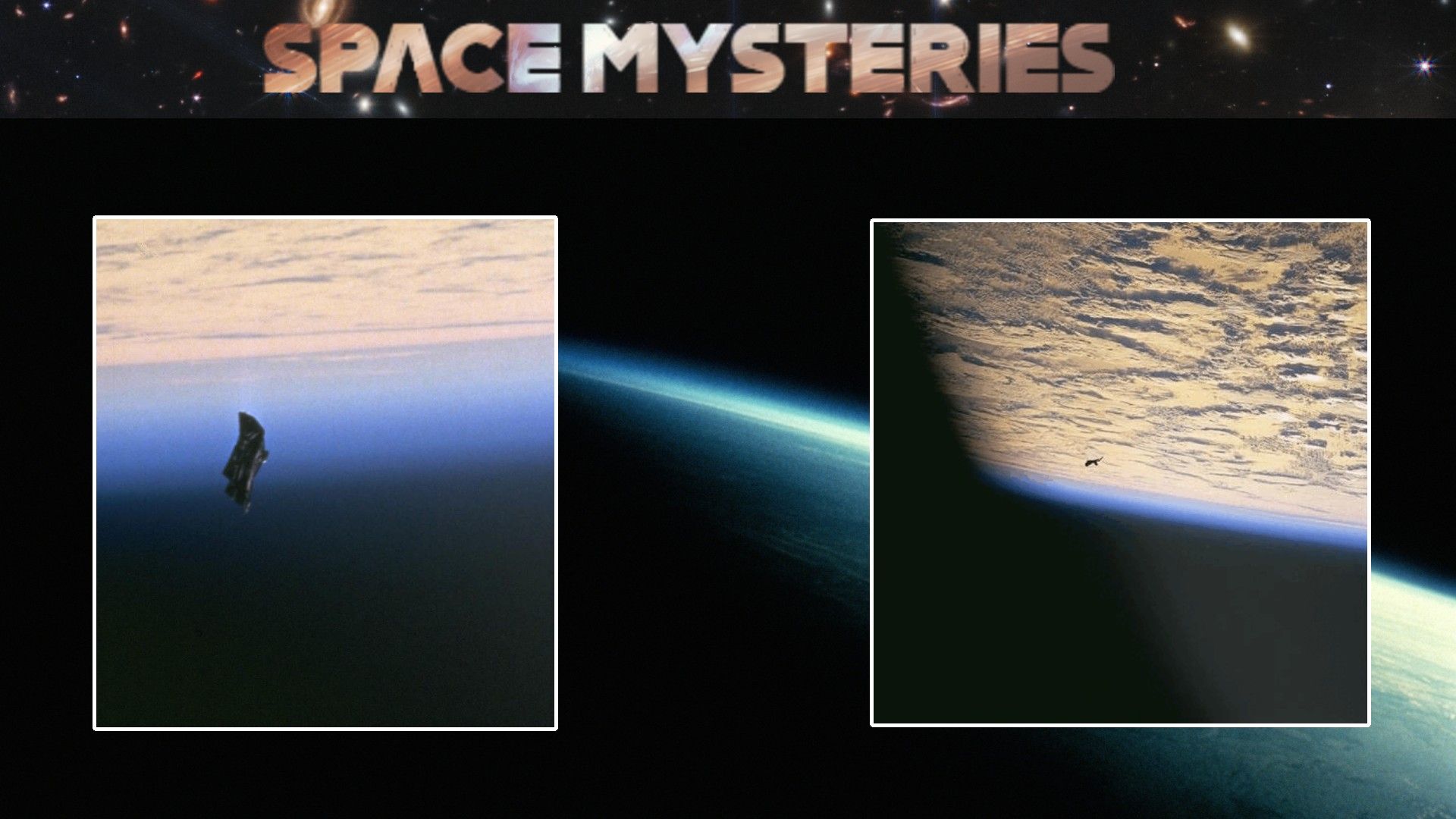
- 2.Could there be an ancient alien satellite in Earth's orbit? How the 'Black Knight' conspiracy theory has survived for over 100 years(space.com)
A Space.com article examines the Black Knight satellite legend, a conspiracy theory claiming an ancient alien satellite orbits Earth. The piece describes how unconnected events and speculative interpretations have accumulated into the theory over more than a century.
- 3.PR100: Drone? Flying Car?(metabunk.org)
Metabunk forum member analyzes a UAP clip (PR100) using thermal imaging analysis, suggesting the heat signature pattern is consistent with a quadcopter drone at full throttle rather than an anomalous craft. The post notes that thermal signatures from quadcopter motors traveling along the arms can mimic unusual visual patterns.
- 4.The Six Infrared Dots in a Declassified UAP Video is a Flock of Birds(avi-loeb.medium.com)
Avi Loeb published an analysis arguing that six infrared dots in a declassified UAP video (DOW-UAP-PR135) released by PURSUE in September 2026 are consistent with a flock of birds. The analysis examines four consecutive frames showing the objects over approximately one second and references recent research by J. Haqq-Misra and colleagues.
- 5.Raytheon's Multi-Spectral Targeting Systems(metabunk.org)
A Metabunk forum thread compiling technical discussions about Raytheon's Multi-Spectral Targeting (MTS) systems, including operating principles, field of view, and tracking modes.
More from The Debrief
- 1.The First LaserSETI Stations in Asia Are Now Active in Saudi Arabia(thedebrief.org)
The SETI Institute and Saudi Arabia's Royal Commission for AlUla have activated the first two LaserSETI stations in Asia, expanding a search for extraterrestrial intelligence using laser detection technology to the region.
- 2.Alien Oceans, Reversing Aging, and Recreating the Early Universe—The Latest from The Debrief(thedebrief.org)
The Debrief newsletter roundup covers multiple science topics including the search for extraterrestrial life on Saturn's moon Enceladus, age-reversal technologies, and early universe research. This is a general science and astrobiology news digest rather than a specific disclosure or finding.
- 3.A New Experiment Suggests Saturn’s Moon Enceladus Could Be More Hospitable to Life Than We Thought(thedebrief.org)
Scientists conducted laboratory experiments growing microorganisms under conditions simulating Saturn's moon Enceladus, yielding results that increase the plausibility of the moon harboring microbial life. The research adds to growing evidence that Enceladus's subsurface ocean environment may be more chemically or biologically favorable than previously understood, though direct detection of life remains unconfirmed.
- 4.On Hostile Alien Worlds, Water Unexpectedly Behaves Like a Bizarre Chemical Shapeshifter(thedebrief.org)
Researchers at the University of Nevada have found that water exhibits unexpected and unusual behavior under extreme conditions found on other planetary bodies. The study examines how water's chemical properties change in hostile environments beyond Earth.
Get the next PURSUE release in your inbox
We check war.gov every day. When a new PURSUE release drops, you get an email within a day: what's in it, in plain English, with links to the files. Plus a short Friday digest of the week's top UAP stories.