Gov Document Drops
Declassified UAP/UFO records from government agencies — PURSUE portal, FBI, CIA, DOD and more. What is PURSUE? →
PURSUE Release 4
July 10, 2026Fourth official tranche of declassified UAP records released by the Department of War under the PURSUE program (Presidential Unsealing and Reporting System for UAP Encounters) — Department of Energy, Department of War, NASA, CIA, FBI.
Official source: https://www.war.gov/ufo↗AgencyTypeFlagSort
40 documents
- ★Historically significant
DOW-UAP-D094, Analysis of Flying Object Incidents in the United States, 1949
Conclusion: It must be accepted that some type of flying objects have been observed, although their identification and origin are not discernible; in the interest of national defense it would be unwise to overlook the possibility that some of these objects may be of foreign origin.
This is Air Intelligence Report No. 100-203-79, 'Analysis of Flying Object Incidents in the U.S.,' Air Intelligence Division Study No. 203, dated 10 December 1948 (cover date 28 April 1949), produced jointly by the USAF Directorate of Intelligence and the Office of Naval Intelligence. The study analyzes approximately 210 reported flying object incidents in the United States, assesses observer credibility, examines possible domestic and foreign origins, and includes selected incident reports, a sightings map, and a survey of experimental flying-wing aircraft from Germany, Great Britain, and the United States. The document concludes that some type of flying object has been observed but that definitive identification and origin cannot be established, while warning that foreign (Soviet) origin cannot be ruled out and would constitute a national security threat.
9/10Department of WarPDFAnalysisTOP SECRET◉ DiscVisualRadarPhotosTestimonyVirginia4/28/49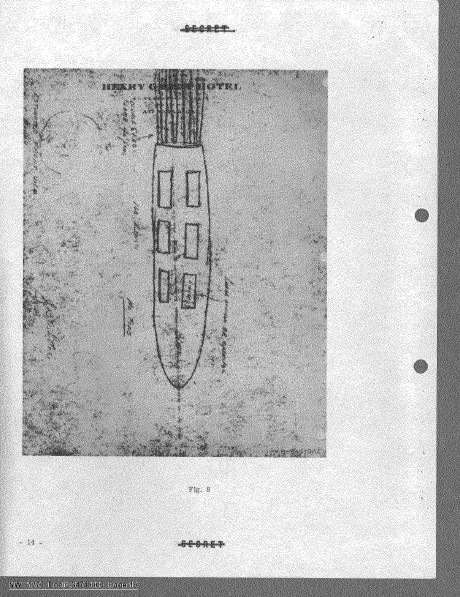
- ★Historically significant
CIA-UAP-D020, Memorandum on Unconventional Aircraft Sightings, 1955
Conclusion: The evidence does not appear sufficiently firm to warrant the conclusion that the Soviets have developed and have in operation a radically new type of aircraft; observations can probably be explained as steep climbing aircraft or missiles.
A CIA memorandum dated 31 October 1955, addressed to the Director of Central Intelligence, summarizing post-debriefing accounts from four witnesses — including U.S. Senator Richard Russell — who observed luminous aerial objects from a train traveling between Baku and Tiflis in the Soviet Union (present-day Azerbaijan/Georgia). The memo documents their individual descriptions of the objects and concludes that the evidence does not firmly support the existence of a radically new Soviet aircraft type, suggesting the objects were more likely steep-climbing aircraft or missiles.
8/10CIAPDFMemoTOP SECRET▲ TriangleTestimonyAzerbaijan1955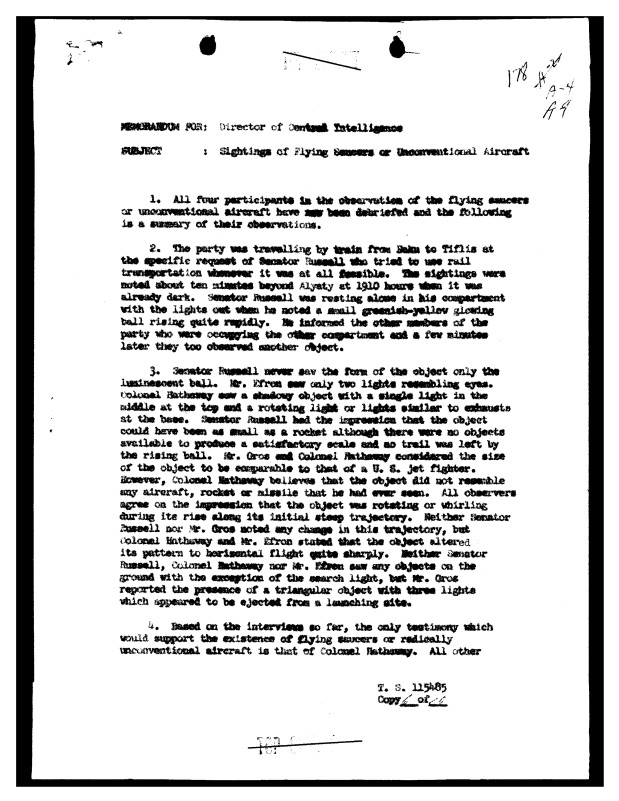
- ★Historically significant
DOE-UAP-D004, Los Alamos Conference on Aerial Phenomena, 1949
Conclusion: No consensus reached; phenomena determined to be inconsistent with conventional meteorite falls but no alternative explanation confirmed; project transferred to Project Grudge for continued investigation.
This document is a full 24-page transcript of a classified SECRET conference held on February 16, 1949, at Los Alamos Scientific Laboratory, convened to analyze a series of anomalous 'green fireball' sightings reported over atomic weapons installations in New Mexico. The attendees included leading Manhattan Project scientists (Teller, Bradbury, Manley, Reines) alongside military intelligence officers, FBI, and meteor expert Dr. Lincoln LaPaz, who led the technical briefing. No consensus explanation was reached, and LaPaz explicitly stated the phenomena were inconsistent with conventional meteorite falls in multiple key characteristics.
8/10Department of EnergyPDFTestimonySECRET? Unknown shapeTestimonyPhotosNew Mexico3/22/49
- ★Historically significant
DOW-UAP-D093, Analysis of Flying Object Incidents in the United States, 1948
Conclusion: It must be accepted that some type of flying objects have been observed, although their identification and origin are not discernible. In the interest of national defense it would be unwise to overlook the possibility that some of these objects may be of foreign origin.
This is Air Intelligence Division Study No. 203, dated 10 December 1948, jointly produced by USAF and ONI (DI/USAF-ONI). It constitutes a formal intelligence analysis of approximately 210 reported flying object incidents in the United States through mid-1948, examining evidence, patterns of sightings, potential origins (domestic or foreign), and hypothetical tactical purposes. The study concludes that some type of flying object has genuinely been observed but cannot be definitively identified, and recommends treating the possibility of foreign — specifically Soviet — origin as a serious national defense concern.
8/10Department of WarPDFAnalysisTOP SECRET◉ DiscVisualRadarPhotosTestimonyMulti-sensorVirginia12/10/48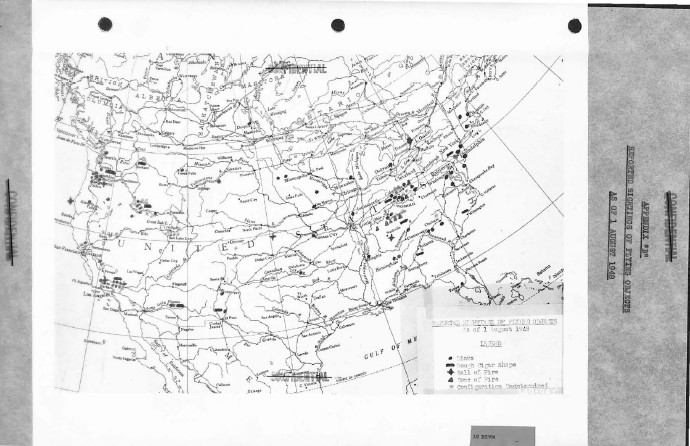
- ★Historically significant
DOW-UAP-D097, Project Sign Progress Report, 1948
Conclusion: Insufficient data for positive identification; low aspect ratio aircraft construction assessed as technically feasible explanation
This is the initial progress report for Project Sign (Project HT-304), dated 23 April 1948, submitted by Headquarters Air Materiel Command (Wright-Patterson AFB) to the USAF Chief of Staff. It consolidates 100 UFO incident reports from mid-1946 through early 1948, providing tabulated data on locations, observer occupations, object descriptions, maneuvers, speeds, and altitudes. Enclosures include photographs from Incident #40, a photographic analysis memo, and a multi-part article from 'The Aeroplane' periodical on low aspect ratio disc-wing aircraft ('The Biology of the Flying Saucer').
8/10Department of WarPDFAnalysisCONFIDENTIAL◉ DiscVisualPhotosTestimonyVarious1948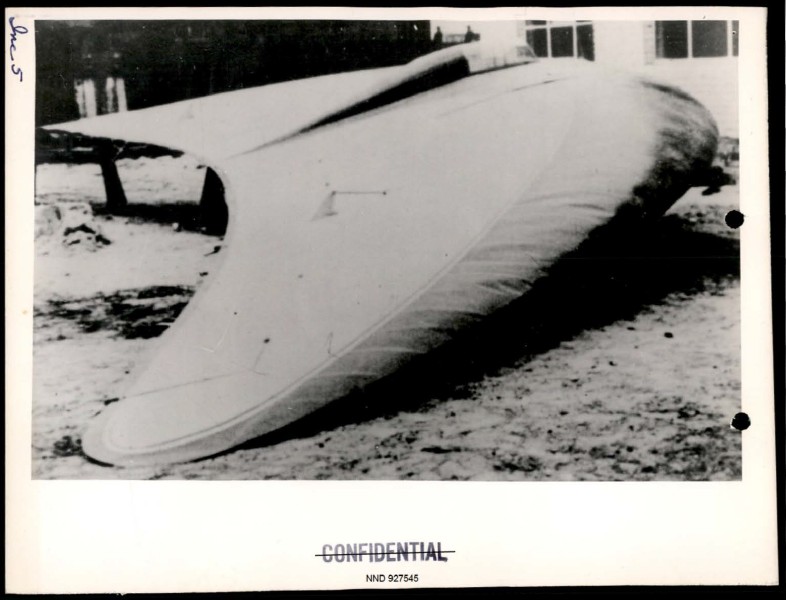
NASA-UAP-D030, STS-80 Unidentified Object Image 1, 1996
During STS-80, between November 19 and December 7, 1996, astronauts aboard Space Shuttle Columbia captured a series of three images of an unidentified object in low-Earth orbit. In the first photograph, the object is visible near the center of the frame, to the right of the limb of the Earth.
8/10NASAImageLow-Earth Orbit1996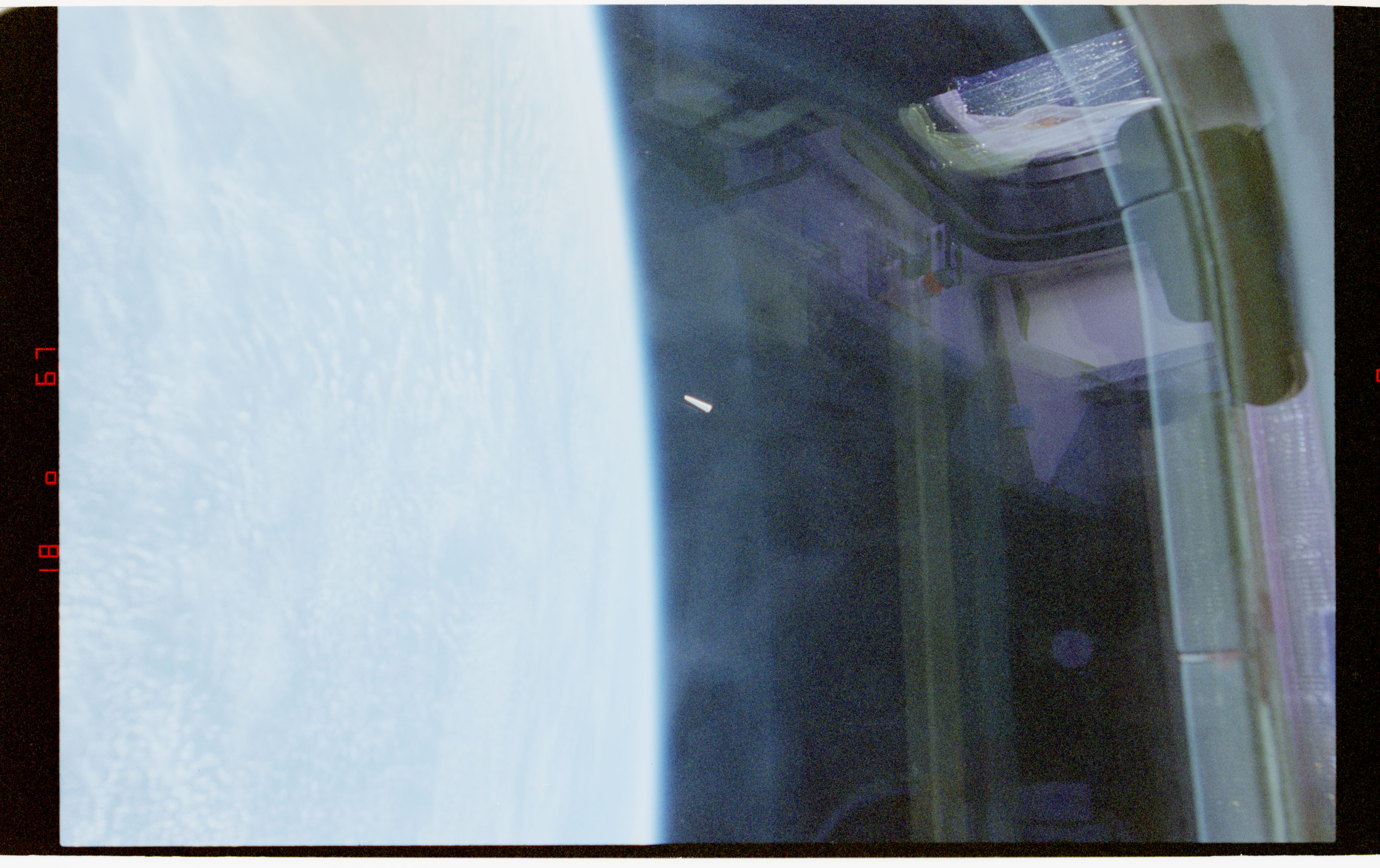
- ●High credibility
DOE-UAP-D005, Pantex Unidentified Object Incident Report, 2015
Conclusion: Under investigation; all evidence turned over to FBI agent for further review. No final determination stated in the document.
This is the complete 6-page incident report documenting an unidentified object detected over the Pantex Plant nuclear weapons facility near Amarillo, Texas on September 1, 2015. The object was tracked by Ground Surveillance Radar (GSR), visually observed by multiple Protective Force personnel, and imaged via CROWS camera and GSR tower video. Enhanced images were subsequently produced by Sandia National Laboratories and all evidence was turned over to the FBI.
7/10Department of EnergyPDFIncident Report◆ DiamondRadarVisualPhotosTestimonyMulti-sensorTexas9/1/15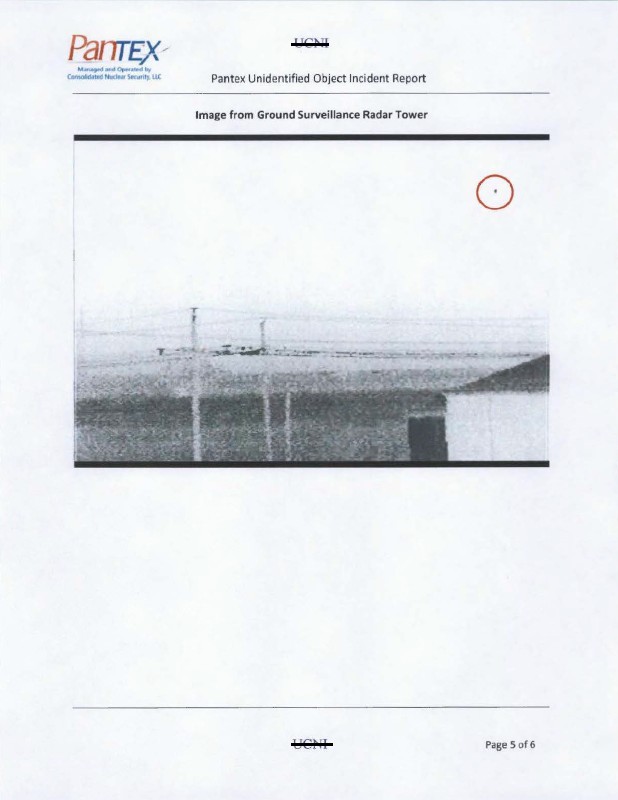
DOW-UAP-D095, Joint U.S.-Canadian Aviation Projects and UFO Sighting Reports, 1954-1955
This file contains reports, memoranda, and correspondence concerning various then-developmental vertical take-off and landing (VTOL) aircraft. The file includes assessments of the experimental potential of the “Avro Project Y2,” a joint U.S.-Canadian near-circular VTOL aircraft that is similar in appearance to contemporary popular descriptions of unidentified flying objects (UFO). A 1954 memorandum opines that VTOL aircraft with a circular planform may be mistaken for UFOs to observers unfamiliar with such technologies. It also recommends that UFO reports in the vicinity of Soviet military operations or assets be re-examined to assess whether they may be attributable to previously unknown advanced VTOL aircraft of foreign design. The file also contains correspondence relating to a UFO incident involving a U.S. Air Force (USAF) KC-97 flying near Newfoundland, Canada in July 1955. A USAF committee found that the characteristics described in the report were inconsistent with those of known Soviet, American, or Canadian military systems. The committee was also “unable to explain the simultaneous ground radar returns and aircrew visual sightings.” It also contains correspondence relating to the potential value of data from incidental radar collection of meteors entering the atmosphere. USAF Air Research and Development Command recommended using that data to improve the performance of the AN/FPS-17 radar system. Finally, the file contains correspondence indicating support for the Communications Instructions for Reporting Vital Intelligence Sightings (CIRVIS) program, a joint U.S.-Canadian civil-military program to standardize reporting methods for unusual or unidentified airborne and maritime hazards and threats.
7/10Department of WarPDFVarious1955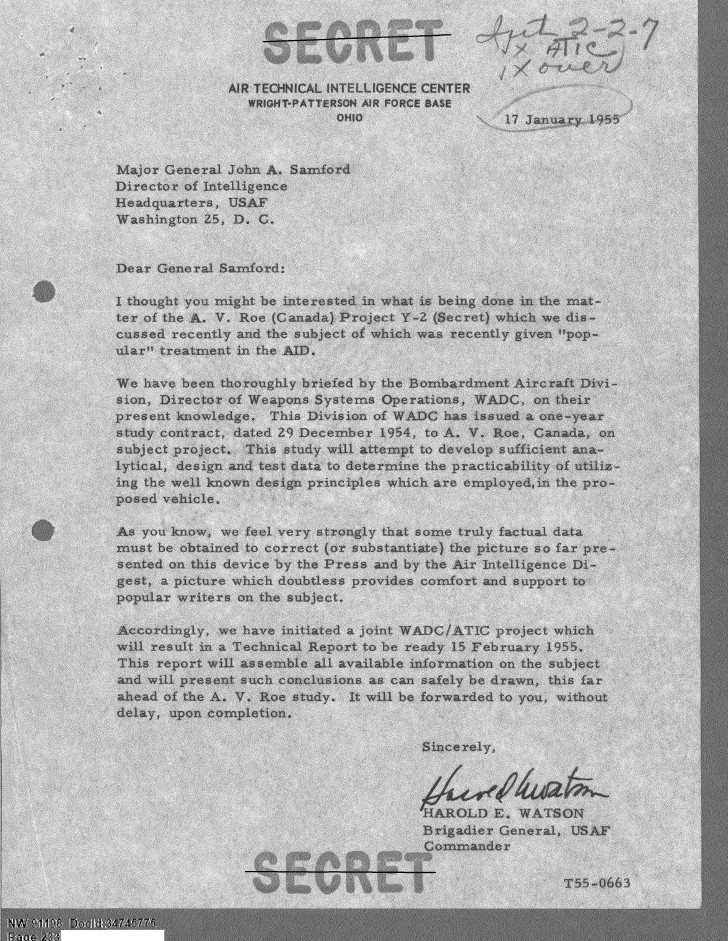
NASA-UAP-D031, STS-80 Unidentified Object Image 2, 1996
During STS-80, between November 19 and December 7, 1996, astronauts aboard Space Shuttle Columbia captured a series of three images of an unidentified object in low-Earth orbit. In the second photograph, the object is visible near the center of the frame, to the right of the limb of the Earth. It appears to have rotated or tumbled about its major axis, which is consistent with the behavior of a free-floating object.
7/10NASAImageLow-Earth Orbit1996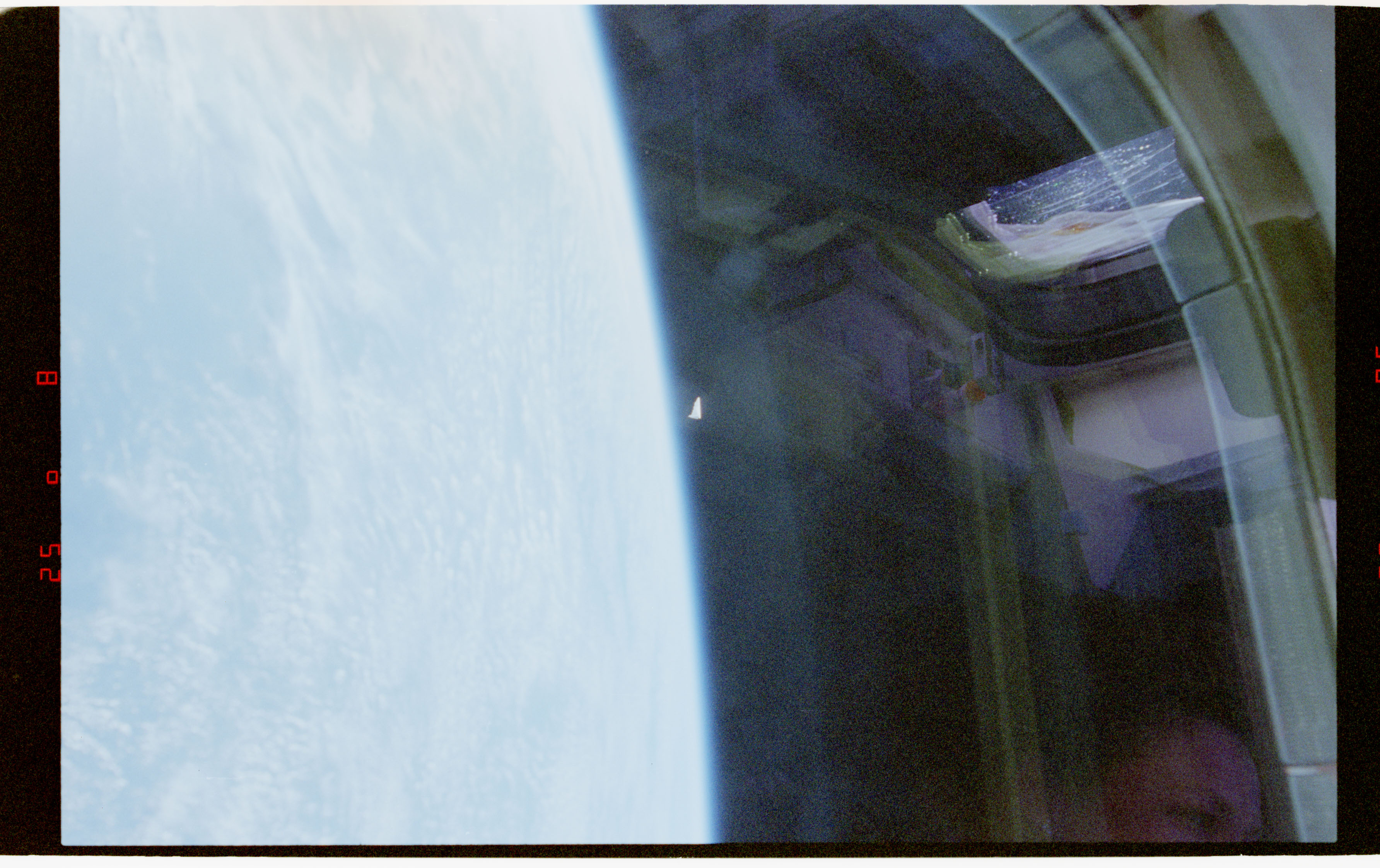
NASA-UAP-D032, STS-80 Unidentified Object Image 3, 1996
During STS-80, between November 19 and December 7, 1996, astronauts aboard Space Shuttle Columbia captured a series of three images of an unidentified object in low-Earth orbit. In the third photograph, the object is visible near the center of the frame, superimposed against the Earth. It appears to have continued along a trajectory passing between Columbia and the Earth.
7/10NASAImageLow-Earth Orbit1996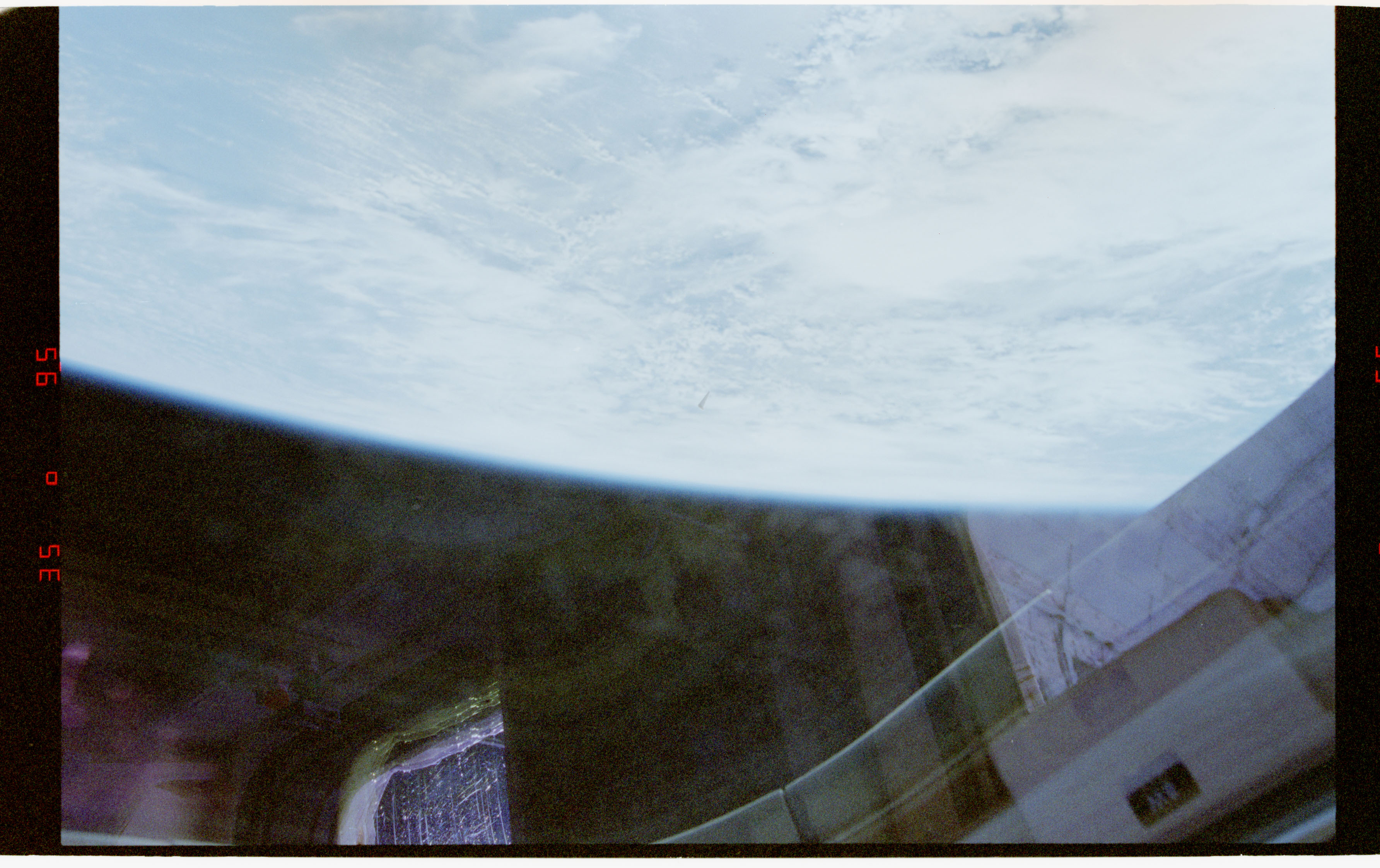
- ★Historically significant
CIA-UAP-D021, Analysis of Unconventional Aircraft Sightings, 1955
Conclusion: Efron's testimony alone could not confirm the existence of any unconventional aircraft; sightings likely explainable and representing no threat to U.S. security.
A TOP SECRET CIA memorandum dated 1955, addressed to the Director of Central Intelligence, authored by Herbert Scoville Jr. (Assistant Director, Scientific Intelligence), analyzing a Prague dispatch (C-103, dated 13 October 1955) reporting two flying saucers or disc-like unconventional aircraft. The memo concludes that witness testimony alone is insufficient to confirm the existence of unconventional aircraft, references the Robertson Panel's prior findings, and discusses the USAF-supported Project 'Y' at Avro Aircraft Ltd. in Canada developing saucer-like aircraft.
6/10CIAPDFMemoTOP SECRET? Unknown shapeTestimony1955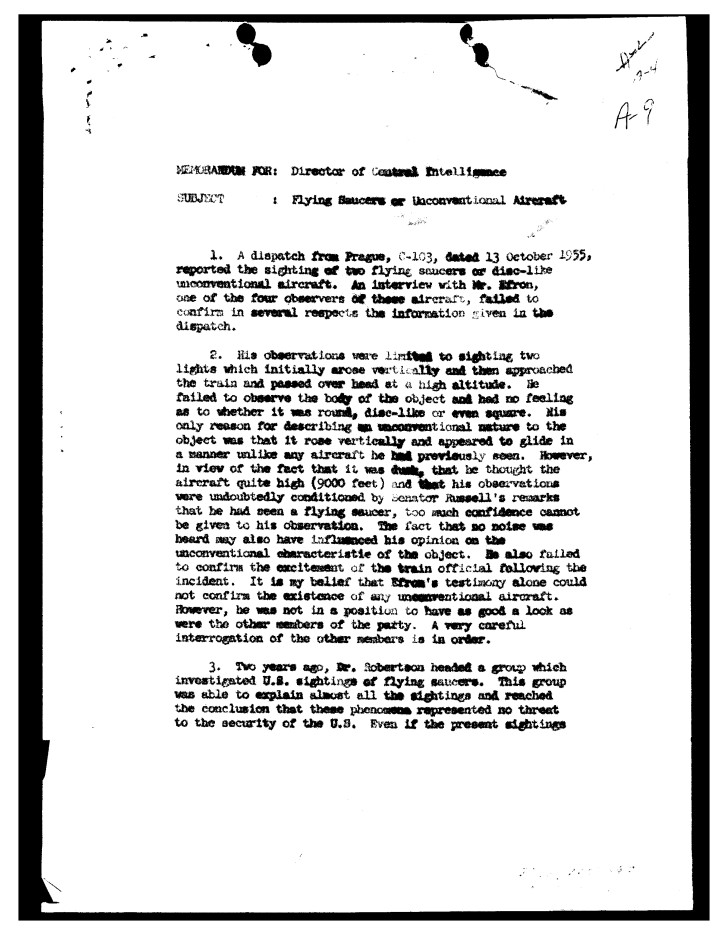
DOW-UAP-D090, Range Fouler Debrief, Eastern United States, 2019
Conclusion: Unresolved; unknown object, no identification made by any crew member
A U.S. Navy Range Fouler Reporting Form submitted by a military-affiliated observer documenting a UAP encounter during a mission sortie in the Eastern United States in 2019. The witness, with 28 years of USAF and Navy experience, observed a small, fast-moving rectangular object traveling opposite their direction of flight from a civilian King Air aircraft. A video recording was made and attached to the report, though most identifying details are heavily redacted.
6/10Department of WarPDFIncident ReportSECRET▬ RectangleTestimonyIR VideoEastern United States2019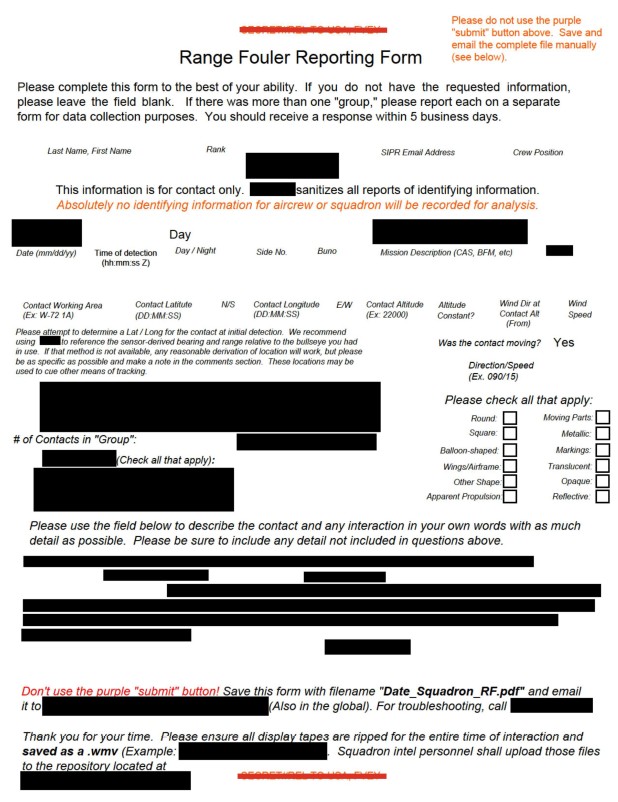
- ★Historically significant
DOW-UAP-D092, Department of the Air Force Committee to Review Project Bluebook, 1966-1967
Conclusion: No evidence of direct threat to national security; Project Blue Book investigations were incomplete due to limited resources; university scientific investigation recommended to provide more thorough scientific examination of selected sightings.
This multi-page file documents the 1965-1969 deliberations, correspondence, and related records of the USAF Scientific Advisory Board's Ad Hoc Committee to Review Project Blue Book. It includes meeting statistics, memos, attendee lists, verbatim notes, and correspondence tracking the Committee's recommendation that the Air Force contract university-based scientific teams to investigate selected UFO sightings, the subsequent establishment of the University of Colorado UFO Study (Condon Committee), and distribution of the final Condon Report. Also included is the complete declassified text of the January 1953 Robertson Panel report on UFOs.
6/10Department of WarPDFMemoUNCLASSIFIEDTestimonyVarious4/17/67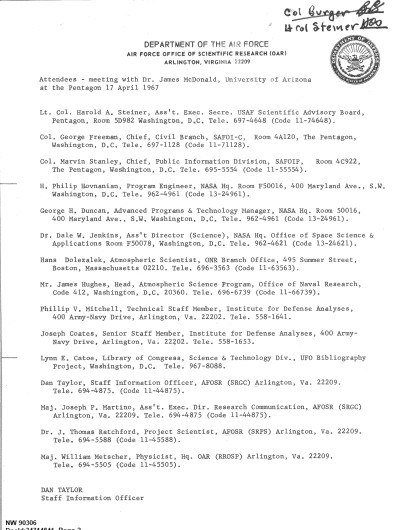
DOW-UAP-PR101, Unresolved UAP Report, South China Sea, 2024
Conclusion: Unresolved
A U.S. Indo-Pacific Command infrared sensor video lasting 1 minute and 46 seconds, submitted to AARO, depicts an unidentified area of contrast tracked across the sensor field-of-view over the South China Sea in 2024. The video shows an elongated or linear grouping of contrast areas that move across the frame before becoming less distinct as apparent distance increases. No analytical conclusion or identification of the observed phenomenon is provided.
6/10Department of WarVideoVideo ReportUNCLASSIFIED? Unknown shapeIR VideoSouth China Sea2024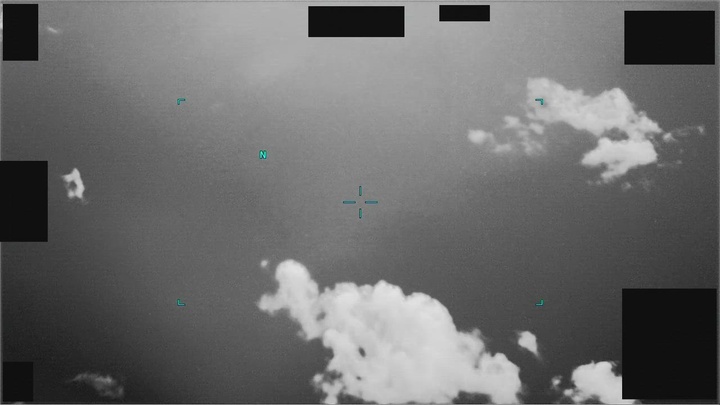
DOW-UAP-D089, Range Fouler Debrief, Eastern United States, 2020
A U.S. Navy Range Fouler Debrief Form documenting an O-4 pilot's observation of an unidentified aerial contact during a training or operational mission in the Eastern United States in 2020. The object was described as small, metallic, reflective on the bottom, with indiscernible shape, moving at constant speed in a constant direction. The form notes the object was also captured by an additional sensor or recording method, with most identifying details heavily redacted.
5/10Department of WarPDFIncident Report? Unknown shapeTestimonyIR VideoEastern United States2020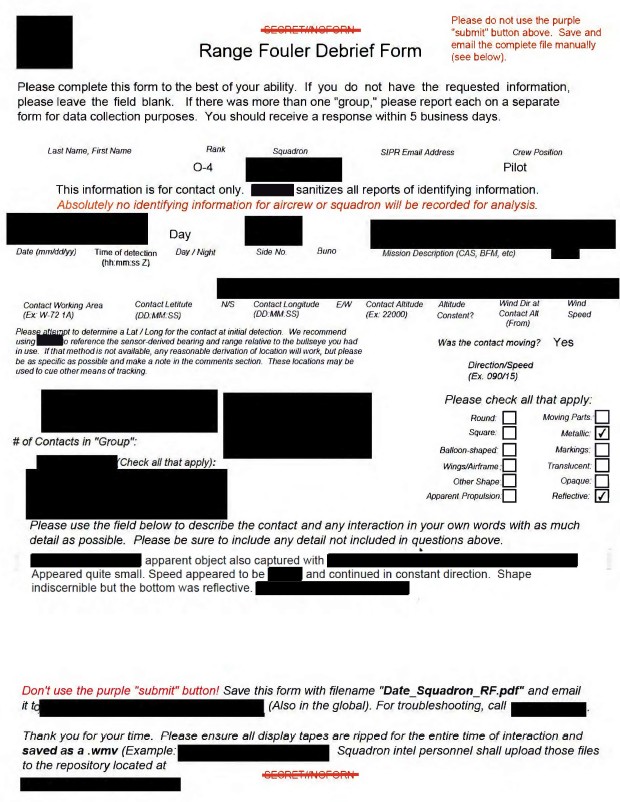
DOW-UAP-PR024, Unresolved UAP Report, Middle East, 2023
Conclusion: Unresolved
A U.S. Central Command infrared sensor video of 18 seconds duration, submitted to AARO, depicts two bright areas of contrast and one dark area of contrast transiting the frame. The footage was recorded from a U.S. military platform in the Middle East in 2023. No analytical conclusion regarding the nature or significance of the observed phenomena is provided in the official description.
5/10Department of WarVideoVideo ReportUNCLASSIFIED? Unknown shapeIR VideoMiddle East2023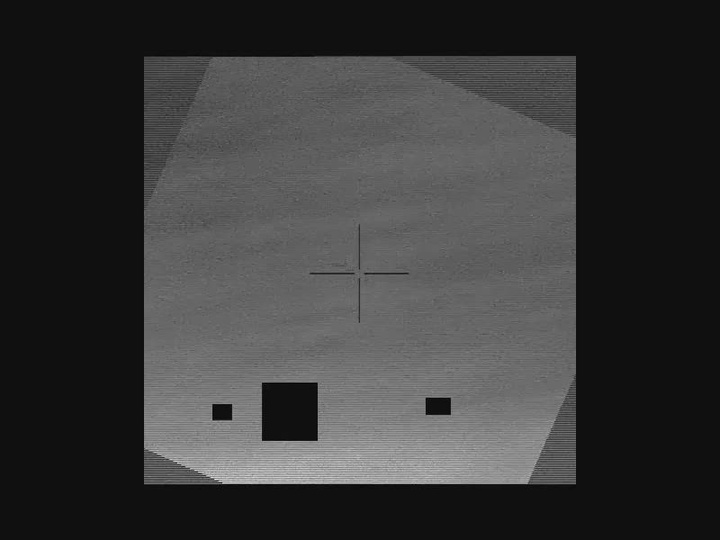
DOW-UAP-PR100, Unresolved UAP Report, Yellow Sea, 2023
Conclusion: Unresolved
A U.S. Indo-Pacific Command report submitted to AARO documents 4 minutes and 57 seconds of electro-optical and infrared sensor footage of an unidentified aerial phenomenon over the Yellow Sea in 2023. The footage was captured by a sensor system aboard a U.S. military platform and shows a tracked area of contrast with intermittent loss of contact. AARO has released an official frame-by-frame description of the video but has not issued an analytical or investigative conclusion.
5/10Department of WarVideoVideo Report? Unknown shapeIR VideoMulti-sensorYellow Sea2023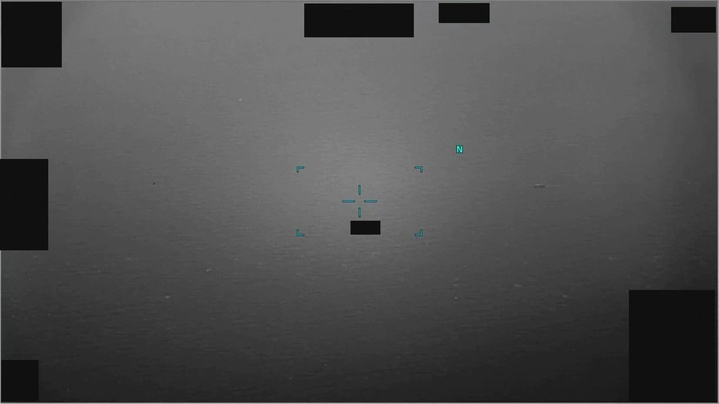
DOW-UAP-PR102, Unresolved UAP Report, East China Sea, 2024
Conclusion: Unresolved
A 36-second infrared sensor video submitted by U.S. Indo-Pacific Command to AARO in 2024, depicting an unidentified area of contrast tracked by an airborne infrared sensor over the East China Sea. The object exits the sensor field-of-view after approximately 20 seconds, and the final six seconds show the sensor zooming without additional content. AARO has not issued an analytical conclusion regarding the event.
5/10Department of WarVideoVideo Report? Unknown shapeIR VideoEast China Sea2024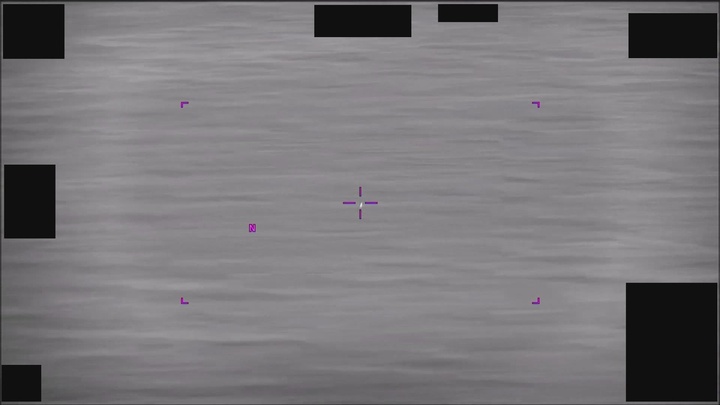
DOW-UAP-PR103, Unresolved UAP Report, East China Sea, 2024
Conclusion: Unresolved
A declassified UAP report submitted by U.S. Indo-Pacific Command to AARO consisting of 76 seconds of infrared sensor footage captured from a U.S. military platform over the East China Sea in 2024. The footage shows an area of contrast tracked by an auto-tracking reticle, but no analytical conclusion regarding the nature of the phenomenon has been released. The official description is deliberately neutral and non-interpretive.
5/10Department of WarVideoVideo Report? Unknown shapeIR VideoEast China Sea2024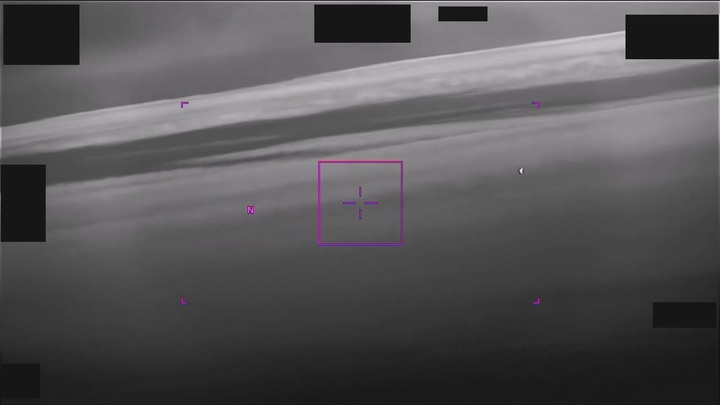
DOW-UAP-PR104, Unresolved UAP Report, Yellow Sea, 2025
Conclusion: Unresolved
A declassified infrared sensor video report submitted by U.S. Indo-Pacific Command to AARO documenting 18 seconds of footage captured over the Yellow Sea in 2025. The footage shows a sensor tracking an area of contrast described as resembling a six-pointed star shape. No analytical conclusion or determination of the object's nature is provided in the official description.
5/10Department of WarVideoVideo Report? Unknown shapeIR VideoYellow Sea2025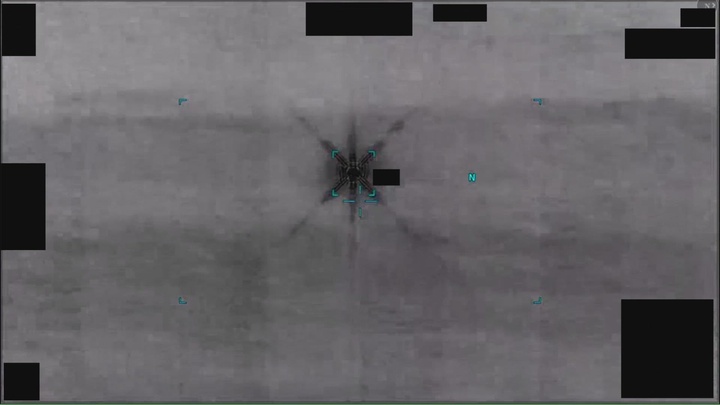
DOW-UAP-PR106, Unresolved UAP Report, Eastern United States, 2020
Conclusion: Unresolved
A United States Northern Command report submitted to AARO in 2020 documents 11 seconds of infrared sensor video capturing an unidentified anomalous phenomenon over the Eastern United States. The object is described as 'quite small,' with a metallic appearance and reflective underside, moving in a constant direction. The video was digitally altered prior to submission to AARO and is presented as received.
5/10Department of WarVideoVideo Report? Unknown shapeIR VideoEastern United States2020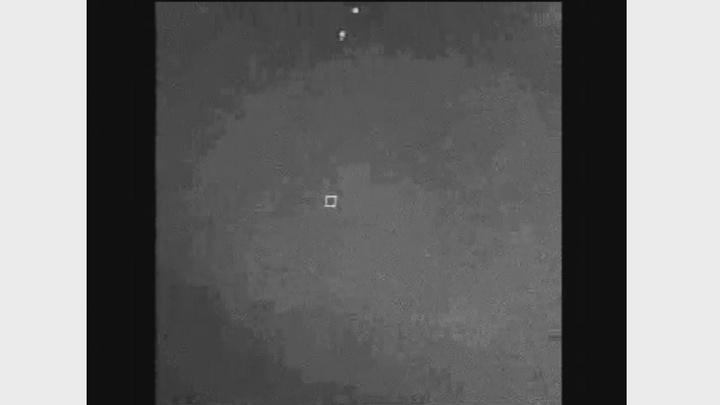
DOW-UAP-PR110, Unresolved UAP Report, Eastern United States, 2020
Conclusion: Unresolved
A 27-second infrared sensor video submitted by U.S. Northern Command to AARO depicts an unidentified area of contrast tracked by an auto-reticle aboard a U.S. military platform over the Eastern United States in 2020. The video shows the sensor panning to track the object, which increases in angular size before exiting the frame. No analytical conclusion or identification has been reached by AARO.
5/10Department of WarVideoVideo Report? Unknown shapeIR VideoEastern United States2020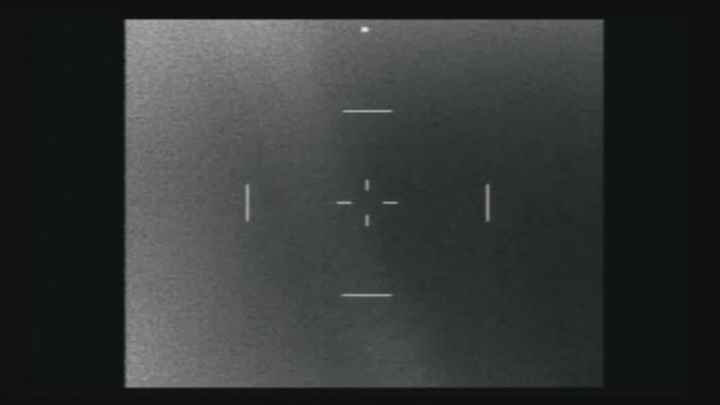
DOW-UAP-PR112, Unresolved UAP Report, Eastern United States, 2019
Conclusion: Unresolved
A 20-second infrared sensor video submitted by the U.S. Navy to AARO depicts an unidentified small object traveling in a straight line at high speed in the Eastern United States in 2019. The accompanying Range Fouler Debrief (DOW-UAP-D090) includes observer testimony characterizing the object's flight characteristics as unlike anything seen in 28 years of U.S. Air Force and U.S. Navy service. The video itself is brief and of limited analytical value due to sensor mode changes and loss of the object from the field of view within 14 seconds.
5/10Department of WarVideoVideo Report? Unknown shapeIR VideoTestimonyEastern United States2019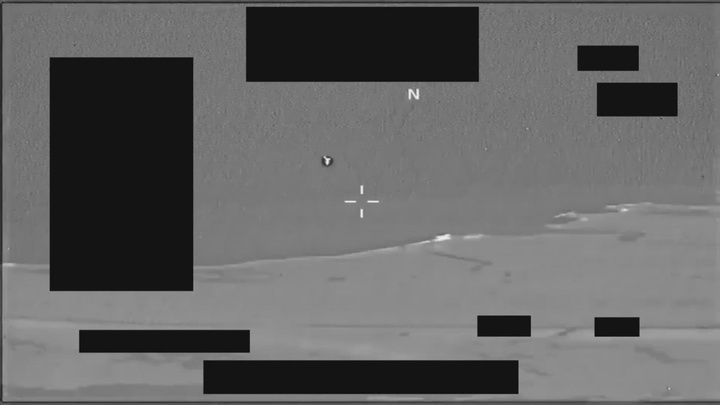
DOW-UAP-PR114, Unresolved UAP Report, Atlantic Ocean, 2016
Conclusion: Unresolved
A 39-second infrared sensor video submitted by U.S. Northern Command to AARO depicting an unidentified area of contrast tracked by a military infrared sensor over the Atlantic Ocean in 2016. The video shows the sensor zooming, switching modes, and tracking the object before losing it, after which a similar area of contrast re-enters the frame. No analytical conclusion regarding the object's nature has been provided.
5/10Department of WarVideoVideo Report? Unknown shapeIR VideoAtlantic Ocean2016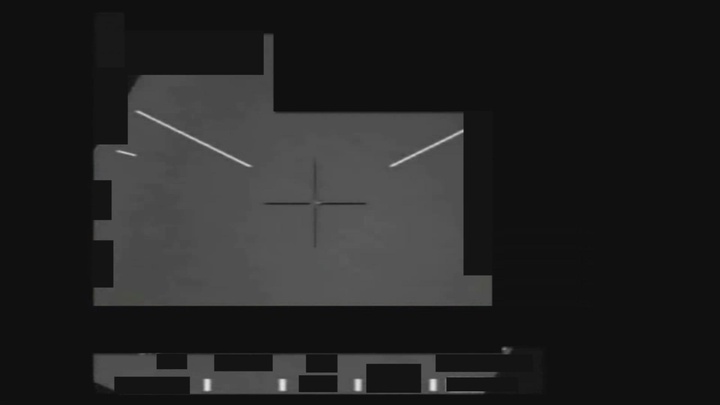
DOW-UAP-D091, Range Fouler Debrief, Atlantic Ocean, 2020
Conclusion: Unresolved; object appeared as a large, somewhat deformed balloon but could not be verified at the merge
A U.S. Navy Range Fouler Debrief Form completed by an O-3 ranked Weapons System Officer (WSO) reporting a single aerial contact observed at dusk during operations in a redacted airspace area. The object was described as a darker maroonish color, approximately 12-15 feet in height, structurally resembling a large, somewhat deformed balloon, traveling generally southward with the wind. The crew proceeded back to their ship after the encounter without incident.
4/10Department of WarPDFIncident Report● SphereTestimonyAtlantic Ocean2020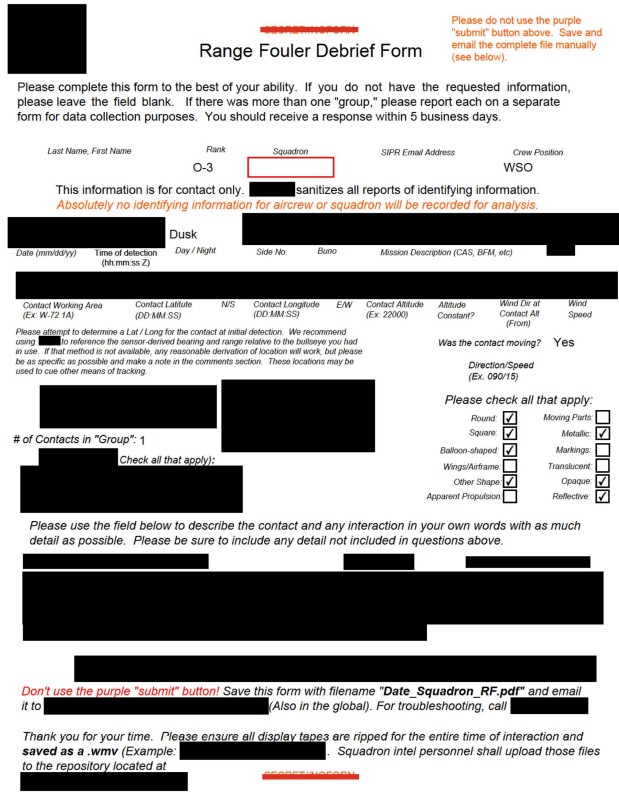
DOW-UAP-D096, Correspondence Relating to Project Blue Book, 1955
This file contains correspondence relating to Project Blue Book, a 1952-1969 U.S. Air Force program to investigate the nature and origin of unidentified flying objects (UFO). The correspondence includes letters and memoranda sent between various departments and agencies of the U.S. Government, the Legislative Branch, and private citizens concerning UFO sightings and the research and findings of Project Blue Book.
4/10Department of WarPDFVarious1955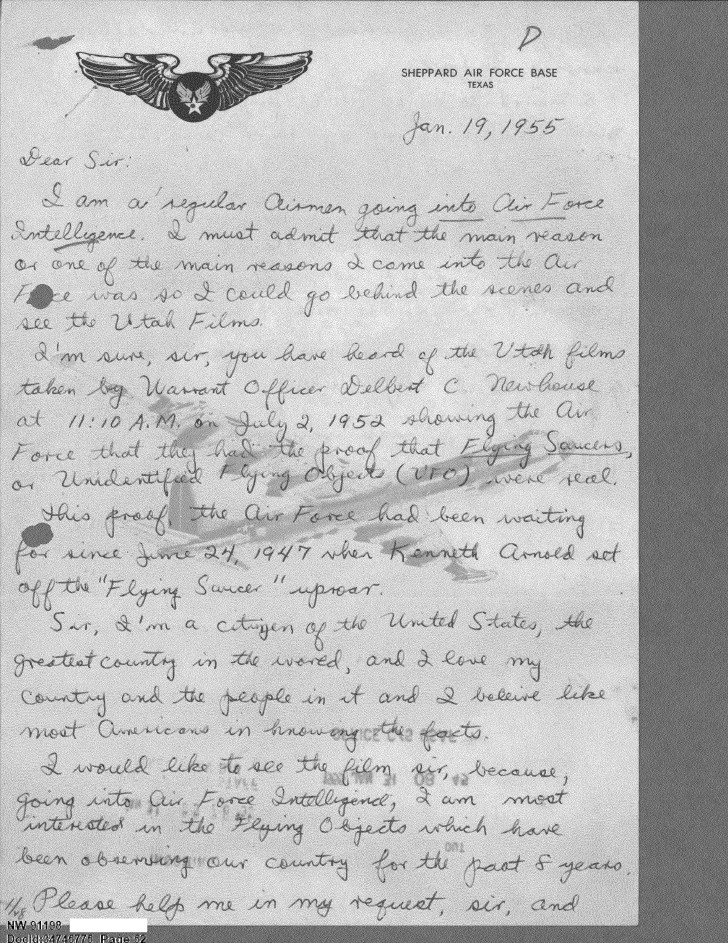
DOW-UAP-PR030, Unresolved UAP Report, Middle East, 2023
Conclusion: Unresolved
A 10-second infrared sensor video submitted by U.S. Central Command to AARO in 2023, captured from an unspecified U.S. military platform over the Middle East. The video shows two brief areas of contrast transiting the sensor field-of-view in opposite directions during a 2-second window. No official analytical conclusion has been reached, and the phenomenon remains unresolved.
4/10Department of WarVideoVideo ReportUNCLASSIFIED? Unknown shapeIR VideoMiddle East2023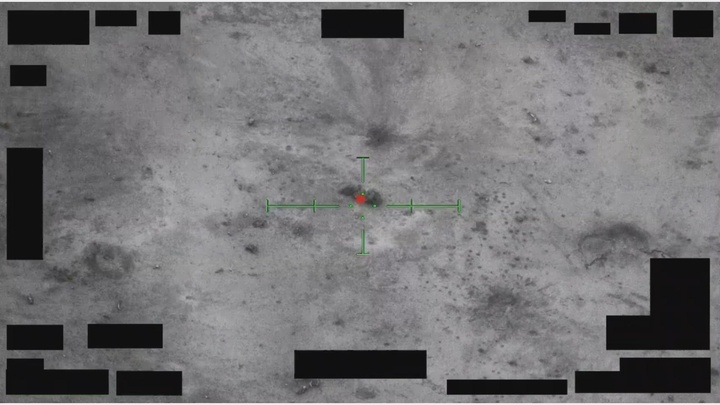
DOW-UAP-PR105, Unresolved UAP Report, East China Sea, 2025
Conclusion: Unresolved
A U.S. Indo-Pacific Command (INDOPACOM) infrared sensor video submitted to AARO in 2025, depicting an unresolved UAP event over the East China Sea. The 5-minute footage shows a sensor tracking an area of contrast for approximately the first two minutes, after which no meaningful content is captured. No analytical conclusion regarding the nature of the phenomenon is provided.
4/10Department of WarVideoVideo ReportUNCLASSIFIED? Unknown shapeIR VideoEast China Sea2025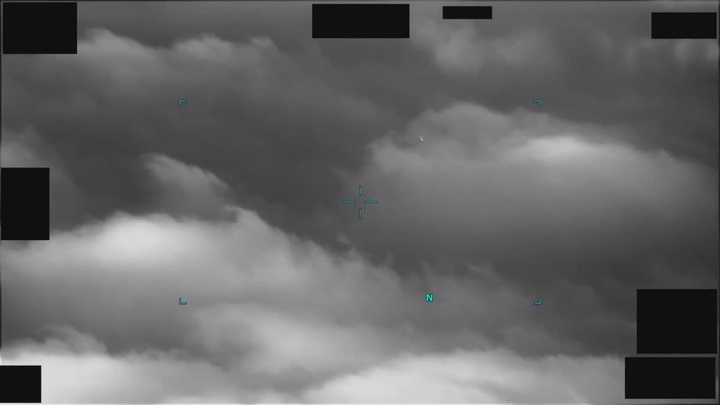
DOW-UAP-PR107, Unresolved UAP Report, Eastern United States, 2020
Conclusion: Unresolved
A 28-second infrared sensor video captured by a U.S. military platform in the Eastern United States in 2020 was submitted by U.S. Northern Command to AARO as an unresolved UAP report. The video shows an area of contrast entering and exiting the sensor field-of-view while the sensor pans to track it. No analytical conclusion or identification of the phenomenon has been provided.
4/10Department of WarVideoVideo ReportUNCLASSIFIED? Unknown shapeIR VideoEastern United States2020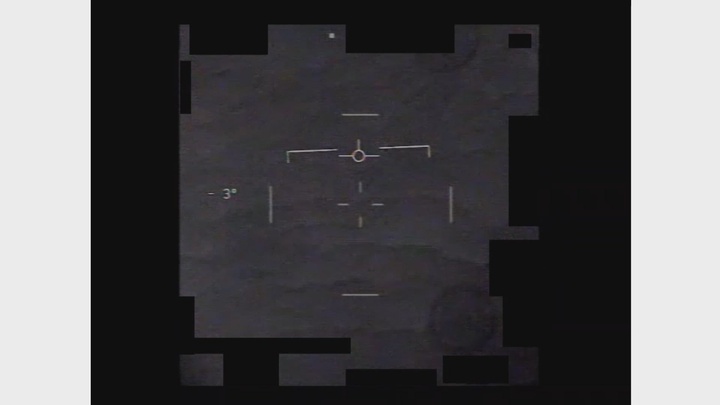
DOW-UAP-PR108, Unresolved UAP Report, Western United States, 2020
Conclusion: Unresolved
A 2-minute 16-second infrared sensor video submitted by U.S. Northern Command to AARO documenting a tracked area of contrast over the Western United States in 2020. The footage shows the sensor zooming, panning, and auto-tracking an unidentified area of contrast before it exits the field of view. No analytical conclusion or identification of the observed phenomenon is provided in the official description.
4/10Department of WarVideoVideo Report? Unknown shapeIR VideoWestern United States2020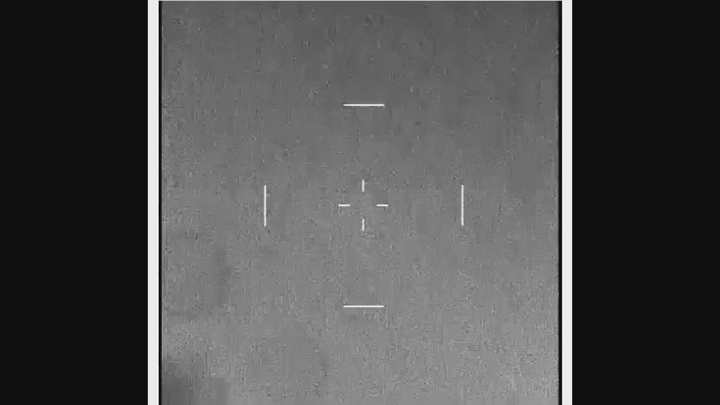
DOW-UAP-PR109, Unresolved UAP Report, Eastern United States, 2015
Conclusion: Unresolved
A 21-second declassified infrared sensor video, transferred from the U.S. Navy UAPTF to AARO in 2022, depicting a brief area of contrast transiting the sensor field-of-view from right to left before exiting the upper left corner. The video was digitally altered prior to being reported to the UAPTF, and no formal data handling practices existed at the time of original reporting. AARO presents the footage as received, without analytical conclusions.
4/10Department of WarVideoVideo Report? Unknown shapeIR VideoEastern United States2015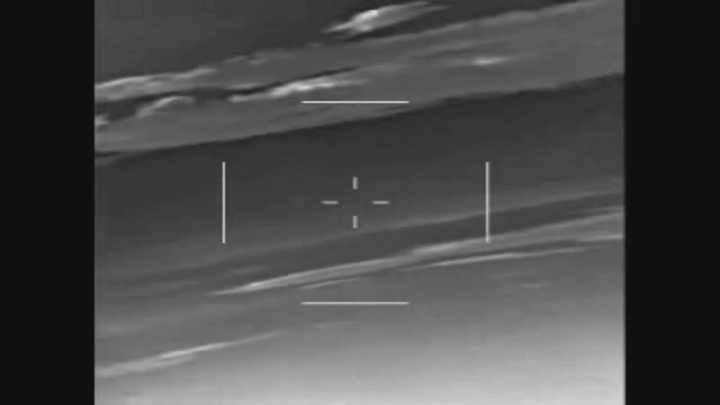
DOW-UAP-PR111, Unresolved UAP Report, Eastern United States, 2020
Conclusion: Unresolved
A 1-minute infrared sensor video submitted by U.S. Northern Command to AARO in 2020 depicts small areas of contrast moving through the sensor field-of-view, one of which is briefly auto-tracked before disappearing. The official description is explicitly non-analytical and makes no determination about the nature of the observed phenomenon. No shape, behavior, or identification is provided beyond basic visual description of contrast areas.
4/10Department of WarVideoVideo ReportUNCLASSIFIED? Unknown shapeIR VideoEastern United States2020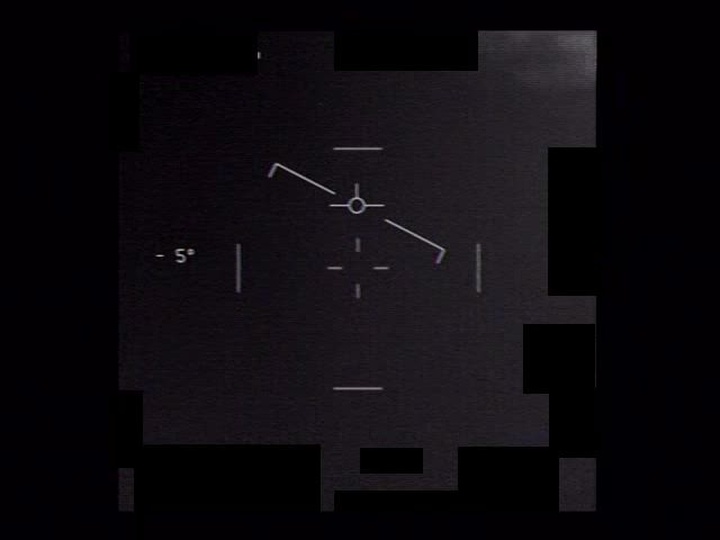
DOW-UAP-PR116, Unresolved UAP Report, Atlantic Ocean, 2020
Conclusion: Unresolved; object described as appearing similar to a 'large, somewhat deformed balloon' traveling with the wind
A 32-second infrared sensor video submitted by U.S. Northern Command to AARO depicts an unidentified aerial phenomenon over the Atlantic Ocean in 2020. The accompanying Range Fouler Debrief describes the object as a dark, maroonish-colored object approximately 12-15 feet in height that traveled with the wind without maneuvering. The document and its supporting debrief suggest the object bears similarity to a large, deformed balloon.
4/10Department of WarVideoVideo Report? Unknown shapeIR VideoAtlantic Ocean2020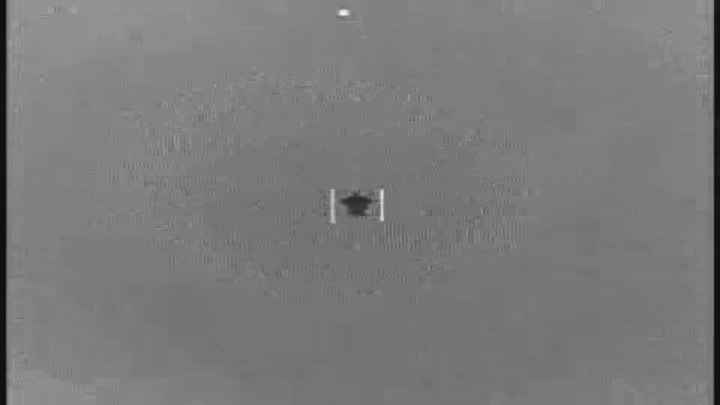
DOW-UAP-PR113, Unresolved UAP Report, Western United States, 1996
Conclusion: Unresolved
This document describes a declassified infrared video (DOW-UAP-PR113) lasting approximately 2 minutes and 57 seconds, transferred from the Navy UAPTF to AARO in 2022, purportedly captured in 1996 over the Western United States. The substantive UAP content consists of only 4 seconds of footage (00:14–00:17) showing an area of contrast transiting the sensor field-of-view, with the remainder of the video being repeats, slow-motion replays, or frozen frames of that same brief sequence. The media was digitally altered prior to being reported to the UAPTF, and no formal data handling practices existed at the time of original reporting.
3/10Department of WarVideoVideo Report? Unknown shapeIR VideoWestern United States1996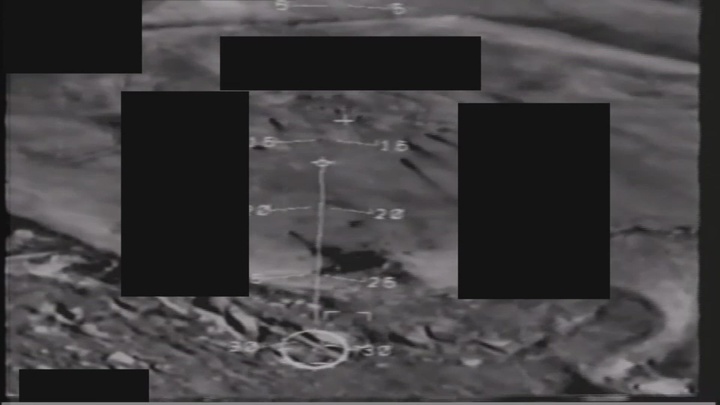
DOW-UAP-PR115, Unresolved UAP Report, Gulf of America, 2019
Conclusion: Unresolved
An 8-second infrared sensor video from a U.S. military platform over the Gulf of America in 2019, submitted by the U.S. Air Force to AARO as an unresolved UAP report. The footage shows an area of contrast near the center of the sensor field-of-view that flickers as the sensor zooms and pans to track it. AARO provides a technical comment suggesting the appearance may be attributable to auto-gain control filtering when the object's temperature approximates that of its environment.
3/10Department of WarVideoVideo ReportUNCLASSIFIED? Unknown shapeIR VideoGulf of America2019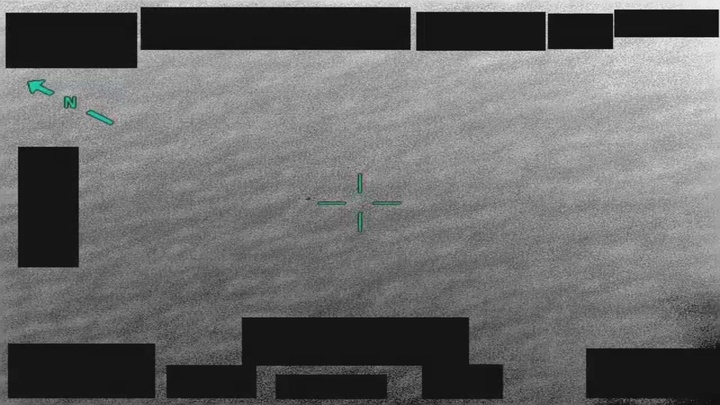
NASA-UAP-D026, Apollo 14 Debriefing, 1971
Conclusion: Light flash phenomena attributed to high-energy cosmic rays passing through the eye and striking the retina; a biological effect, not an unidentified aerial phenomenon.
This document contains segment 1 of 2 of the Apollo 14 post-mission crew debriefing held at the Manned Spacecraft Center in Houston, Texas, on February 18, 1971. The crew and debriefers discuss the 'light flash phenomena,' a biological effect caused by high-energy cosmic rays passing through the eye and striking the retina, producing perceived light streaks or flashes. This phenomenon is now well-understood and documented in the scientific literature.
2/10Department of WarVideoTestimonyTestimonyTexas2/18/71
FBI-UAP-D014, Correspondence Relating to UFO Sightings, 1967, 1974
Conclusion: FBI states it has no information regarding the described UFO sightings and does not collect UFO sighting information as a matter of policy.
This FBI file contains two separate pieces of correspondence regarding UFO sightings. The first is a 1967 internal FBI memo relaying a telephonic report from an eleven-year-old child who claimed to see a flash of light in the sky. The second is a 1974 exchange in which researcher Larry W. Bryant inquired about a 1954 UFO sighting allegedly involving U.S. Coast Guard personnel, to which the FBI responded it had no relevant records and did not collect UFO information.
2/10FBIPDFMemoUNCLASSIFIED? Unknown shapeTestimonyVarious10/10/74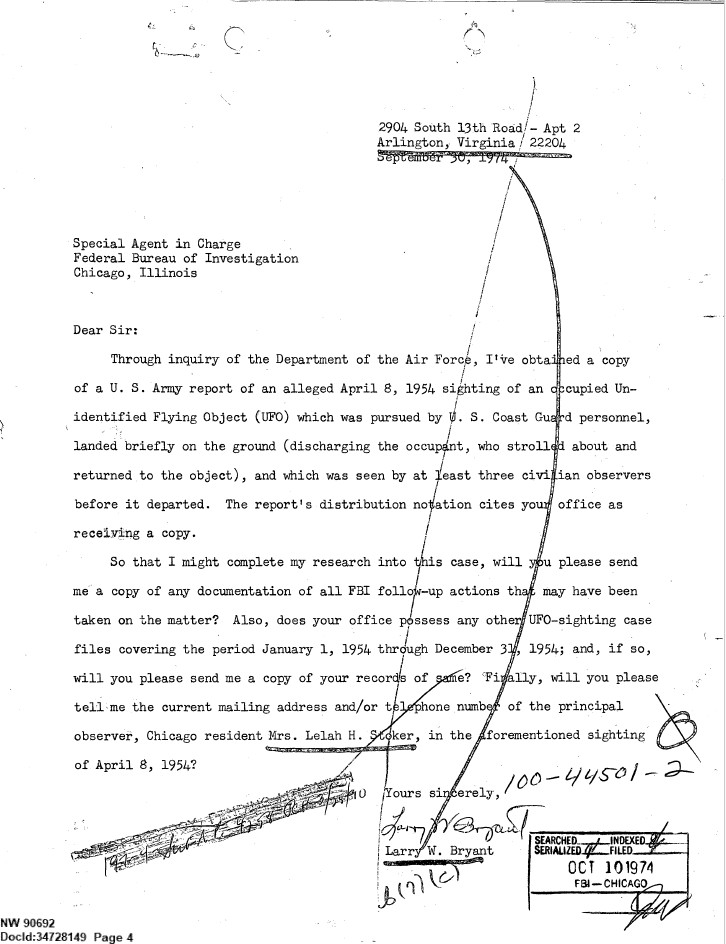
NASA-UAP-D027, Apollo 14 Debriefing (Continued), 1971
Conclusion: Light flashes perceived by astronauts are caused by high-energy cosmic rays passing through the eye and striking the retina — a biological phenomenon, not an anomalous external object.
This document contains the second segment of the Apollo 14 post-mission crew debriefing held at the Manned Spacecraft Center in Houston, Texas, in February 1971. The primary subject of discussion is the 'light flash phenomena,' in which cosmic rays passing through the eye stimulate the retina to produce perceptions of light streaks or flashes. This phenomenon is now well-understood as a biological effect of high-energy cosmic radiation exposure during spaceflight.
1/10Department of WarVideoTestimonyTestimonyTexas2/18/71
NASA-UAP-D028, Apollo 17 Crew Medical Debriefing, 1972
Conclusion: Light flash phenomena attributed to high-energy cosmic rays passing through the eye and striking the retina — a known biological effect.
This document is a post-mission medical debriefing recording from Apollo 17 crew members at the Manned Spacecraft Center in Houston, Texas, conducted following the December 1972 mission. The crew discusses 'light flash phenomena' — the biological effect of high-energy cosmic rays passing through the eye and stimulating the retina — which two of three crew members reported experiencing during the mission. This is a medical/scientific debrief with no UAP content.
1/10Department of WarVideoOtherTestimonyTexas12/21/72
NASA-UAP-D029, Apollo 17 Crew Medical Debriefing (Continued), 1972
Conclusion: Light flashes observed by crew attributed to high-energy cosmic rays striking the retina — a biological effect, not an anomalous phenomenon.
This document is segment 2 of 2 of the Apollo 17 post-mission medical debriefing held at the Manned Spacecraft Center (Johnson Space Center) in Houston, Texas, in December 1972. The debriefing focuses on the 'light flash phenomena' experienced by Apollo 17 crew members, which is a well-understood biological effect caused by high-energy cosmic rays striking the retina. Two of the three crew members reported observing these light flashes during the mission, including in lunar orbit and on the lunar surface.
1/10Department of WarVideoTestimonyTestimonyTexas12/21/72